
A Cancer Pain Management diagnosis can bring many physical and emotional challenges, and one of the most common concerns for patients and their families is pain. Cancer pain can affect daily activities, sleep, appetite, emotional well-being, and overall quality of life. However, it is important to understand that most cancer pain can be effectively managed with the right medical care and a personalized treatment plan.
Modern cancer pain management focuses on more than simply reducing pain. It aims to improve comfort, maintain independence, support emotional well-being, and help patients continue their daily lives as actively as possible. Advances in pain medicine, interventional procedures, medications, rehabilitation, and palliative care have made it possible for many patients to experience significant relief.
Every patient’s experience with cancer pain is different. The type of cancer, its stage, treatment received, and overall health all influence the type and severity of pain. This is why treatment should always be individualized and guided by experienced healthcare professionals.
In this comprehensive guide, you’ll learn what cancer pain is, why it occurs, its different types, common causes, and the treatment options available to improve quality of life.
What Is Cancer Pain?
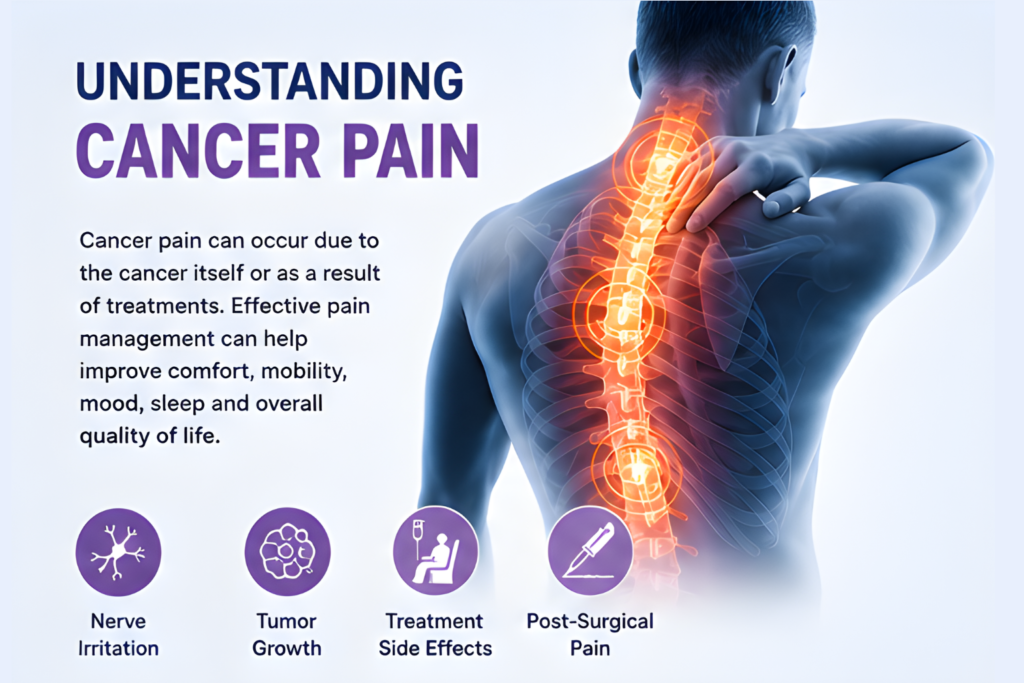
Cancer pain refers to pain caused directly or indirectly by cancer or its treatment. It may develop because a tumor presses on bones, nerves, muscles, or internal organs. Pain may also result from surgery, chemotherapy, radiation therapy, or other cancer treatments.
Some patients experience pain only occasionally, while others may have persistent pain that requires ongoing management. The pain may be mild, moderate, or severe and can change over time as the disease or treatment progresses.
It is important to remember that pain should never be accepted as a normal part of cancer. Patients should discuss any new or worsening pain with their healthcare team so that appropriate treatment can be started as early as possible.
Why Does Cancer Cause Pain?
Cancer pain develops for many reasons. Understanding the cause helps healthcare professionals choose the most appropriate treatment.
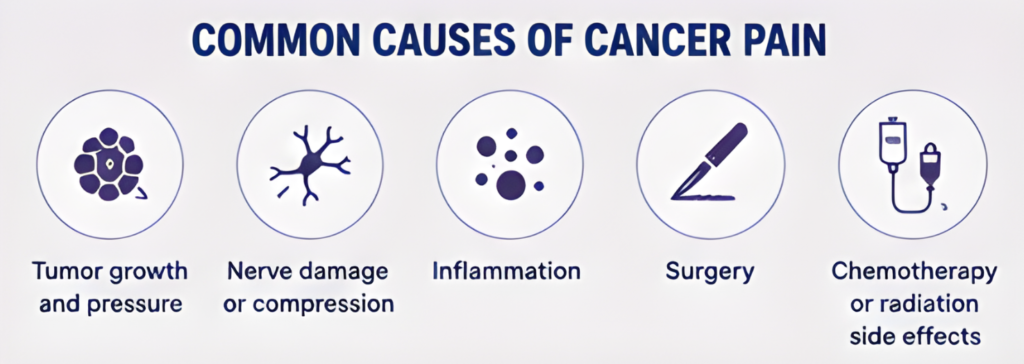
1. Tumour Pressure
As a tumour grows, it may press against nearby nerves, bones, muscles, blood vessels, or organs. This pressure can lead to persistent pain and reduced movement.
For example:
- A spinal tumour may compress nerves, causing back pain or leg pain.
- A tumour affecting the pelvis may cause hip or lower abdominal pain.
2. Bone Involvement
When cancer spreads to the bones, it may weaken them and cause pain, especially during movement or weight-bearing activities.
Bone pain is commonly associated with cancers such as:
- Breast cancer
- Prostate cancer
- Lung cancer
- Kidney cancer
- Thyroid cancer
Patients may describe bone pain as deep, aching, or constant.
3. Nerve Damage
Cancer can directly damage nerves or compress them, leading to neuropathic pain.
Symptoms may include:
- Burning pain
- Tingling sensations
- Electric shock-like pain
- Numbness
- Increased sensitivity to touch
Neuropathic pain often requires a different treatment approach than muscle or joint pain.
4. Pain Caused by Cancer Treatment
Cancer treatments can sometimes cause temporary or long-term pain.
Examples include:
- Pain after surgery
- Nerve damage related to chemotherapy
- Radiation-related tissue irritation
- Joint or muscle pain associated with certain cancer therapies
Managing these side effects is an important part of comprehensive cancer care.
5. Inflammation
Cancer and its treatment may trigger inflammation in surrounding tissues, leading to swelling, tenderness, and discomfort.
Reducing inflammation often helps improve pain control and overall comfort.
Types of Cancer Pain
Cancer pain is usually classified based on its source. Identifying the type of pain helps doctors develop a personalized treatment plan.
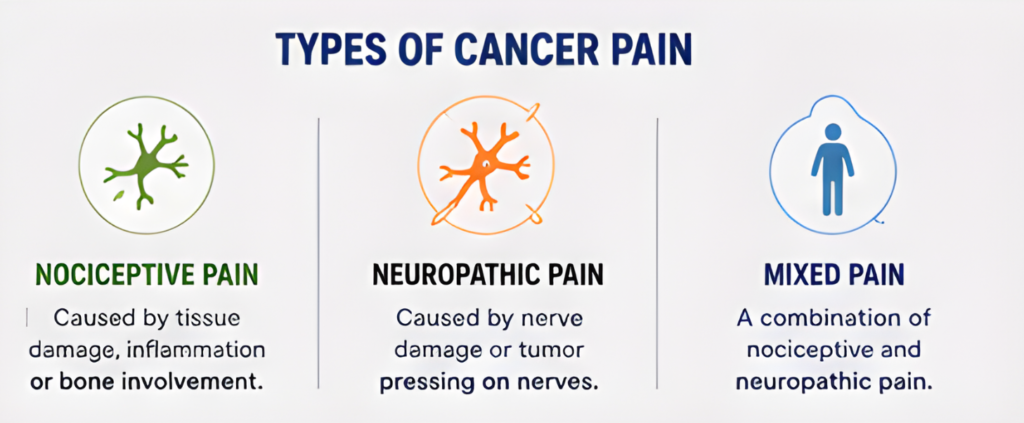
Nociceptive Pain
This pain occurs when body tissues such as bones, muscles, joints, or organs are injured or inflamed.
Patients often describe it as:
- Aching
- Throbbing
- Pressure-like
- Sharp during movement
Examples include:
- Bone pain
- Muscle pain
- Joint pain
- Pain from enlarged organs
Neuropathic Pain
Neuropathic pain develops when nerves are damaged by cancer or its treatment.
Patients may experience:
- Burning sensations
- Electric shock-like pain
- Tingling
- Numbness
- Shooting pain
This type of pain often requires specialized medications or interventional pain management techniques.
Breakthrough Cancer Pain
Breakthrough pain is a sudden flare-up of severe pain that occurs despite otherwise well-controlled pain.
It may be triggered by:
- Walking
- Changing position
- Coughing
- Medical procedures
These episodes are usually short but intense and should be discussed with your healthcare team, as treatment plans can often be adjusted.
Acute Cancer Pain
Acute pain develops suddenly and is usually related to surgery, medical procedures, or certain treatments.
It often improves as healing occurs but should still be managed effectively to support recovery.
Chronic Cancer Pain
Some patients experience pain that lasts for months or longer.
Chronic cancer pain may result from:
- Ongoing tumour growth
- Long-term nerve damage
- Bone involvement
- Previous cancer treatments
Long-term pain management often involves a combination of medications, rehabilitation, psychological support, and minimally invasive procedures.
Common Causes of Cancer Pain
Cancer pain can arise from many different situations, and more than one cause may be present at the same time.
Tumour Growth
As cancer grows, it may place pressure on surrounding tissues, leading to persistent pain and reduced function.
Cancer Spreading to Bones
Bone metastases are one of the most common causes of severe cancer pain.
Patients may notice:
- Deep aching pain
- Pain during movement
- Tenderness over affected bones
- Reduced mobility
Nerve Compression
When a tumour presses on a nerve, patients may experience:
- Shooting pain
- Weakness
- Tingling
- Numbness
Early assessment is important to prevent further nerve damage.
Surgery
Pain after cancer surgery is common and usually improves with time. However, some patients develop persistent post-surgical pain that may require specialized management.
Chemotherapy-Induced Peripheral Neuropathy
Certain chemotherapy medicines can damage peripheral nerves.
Common symptoms include:
- Tingling in the hands or feet
- Burning pain
- Numbness
- Difficulty with balance or fine movements
Early recognition allows doctors to adjust treatment and recommend supportive care.
Radiation Therapy
Radiation treatment may cause temporary inflammation of the skin or surrounding tissues, leading to discomfort during or shortly after treatment.
Most side effects improve over time with appropriate medical care.
Why Early Pain Management Is Important
Many people believe they should tolerate pain during cancer treatment. In reality, pain should always be assessed and managed.
Early pain management can help:
- Improve quality of life
- Support better sleep
- Increase mobility
- Improve appetite
- Enhance emotional well-being
- Help patients remain active during treatment
- Allow greater participation in daily activities and family life
Effective pain management is an important part of comprehensive cancer care and should be discussed openly with your healthcare team.
Symptoms of Cancer Pain
Cancer pain is not the same for every patient. It can vary depending on the type of cancer, its location, stage of the disease, and the treatments being received. Some people experience mild discomfort, while others may have persistent or severe pain that affects everyday life.
Pain may be:
- Constant throughout the day
- Intermittent (comes and goes)
- Mild, moderate, or severe
- Localized to one area
- Spread to different parts of the body
Patients often describe cancer pain as:
- Dull aching pain
- Sharp or stabbing pain
- Burning sensation
- Throbbing pain
- Pressure-like pain
- Electric shock-like pain
- Cramping pain
- Tingling or numbness
In addition to pain, patients may experience:
- Fatigue
- Difficulty sleeping
- Reduced appetite
- Muscle weakness
- Limited movement
- Anxiety or depression
- Difficulty concentrating
- Reduced quality of life
These symptoms should not be ignored, as timely treatment can improve comfort and overall well-being.
Understanding Breakthrough Cancer Pain
Even when regular pain medication is working well, some patients experience sudden episodes of severe pain known as breakthrough pain.
Breakthrough pain usually:
- Starts suddenly
- Lasts for a short period
- Is more intense than usual pain
- May occur several times a day
It can be triggered by:
- Walking
- Coughing
- Standing
- Dressing
- Medical procedures
- Sometimes no obvious trigger
If breakthrough pain occurs frequently, your healthcare team may adjust your pain management plan to provide better control.
How Doctors Assess Cancer Pain
Accurate pain assessment is one of the most important steps in effective cancer pain management.
Your doctor will ask detailed questions such as:
- Where is the pain located?
- When did it begin?
- How often does it occur?
- How severe is it?
- What makes it better or worse?
- Does it affect sleep?
- Does it interfere with eating, walking, or work?
- Which treatments have already been tried?
Keeping a pain diary can help patients record:
- Pain intensity
- Duration
- Activities that worsen pain
- Medication taken
- Relief obtained
This information helps healthcare providers tailor treatment to individual needs.
Pain Rating Scales
Doctors often use pain scales to understand the severity of symptoms and monitor progress over time.
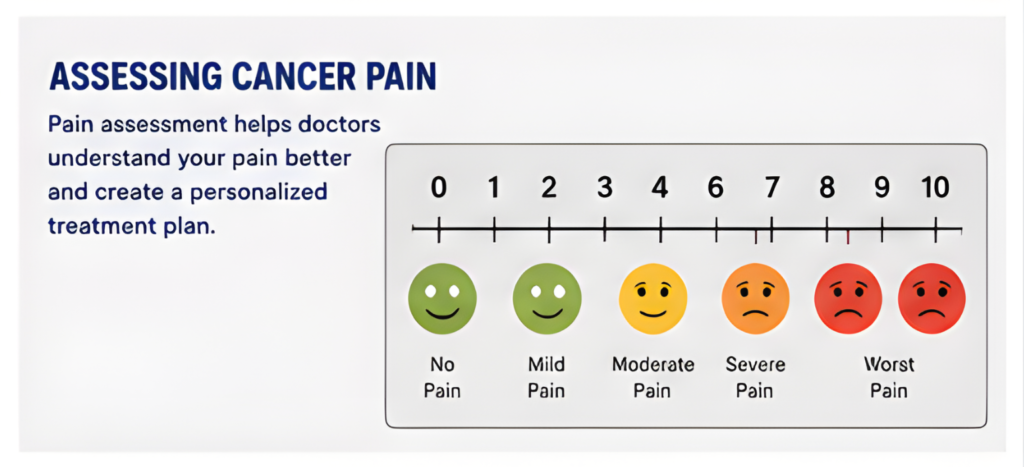
Numerical Rating Scale (0–10)
Patients rate their pain from:
- 0 = No pain
- 1–3 = Mild pain
- 4–6 = Moderate pain
- 7–10 = Severe pain
This simple scale helps track whether treatment is improving pain control.
Visual Analogue Scale (VAS)
Some clinics use a visual line where patients indicate their pain level between “no pain” and “worst imaginable pain.”
Functional Assessment
Pain is also evaluated based on how much it affects daily life.
Doctors may ask:
- Can you walk comfortably?
- Are you able to sleep through the night?
- Can you perform daily activities independently?
- Has pain affected your mood or relationships?
The goal of treatment is not only to reduce pain but also to improve overall function and quality of life.
Diagnosing the Cause of Cancer Pain
Cancer pain may have several contributing factors. Identifying the exact cause allows healthcare providers to recommend the most appropriate treatment.
Diagnosis typically includes:
Medical History
Your doctor will review:
- Cancer type
- Stage of cancer
- Previous treatments
- Current medications
- Existing medical conditions
- Previous surgeries
- Pain history
This information provides valuable clues about the source of pain.
Physical Examination
A thorough examination may include:
- Checking areas of tenderness
- Assessing muscle strength
- Testing sensation
- Evaluating joint movement
- Assessing balance and walking
- Looking for swelling or signs of nerve involvement
Imaging Studies
Depending on your symptoms, your doctor may recommend imaging tests such as:
X-rays
Useful for evaluating:
- Bone involvement
- Fractures
- Joint changes
MRI Scan
MRI provides detailed images of soft tissues and helps identify:
- Nerve compression
- Spinal cord involvement
- Muscle abnormalities
- Tumour-related changes
CT Scan
CT scans help assess:
- Internal organs
- Bone structures
- Tumour size and location
PET Scan
In selected situations, PET scans may help evaluate cancer activity and identify areas that require further assessment.
Factors That Can Increase Cancer Pain
Several factors can influence how pain is experienced.
These include:
Cancer Stage
Advanced disease may increase the likelihood of pain, although pain can occur at any stage.
Tumour Location
Pain often depends on where the tumour is located.
Examples include:
- Spine – back pain or nerve pain
- Bones – deep aching pain
- Abdomen – cramping or pressure
- Chest – discomfort during breathing
Cancer Treatment
Pain may occur as a side effect of:
- Surgery
- Chemotherapy
- Radiation therapy
- Certain targeted treatments
Healthcare providers work to manage these side effects while continuing cancer treatment whenever possible.
Emotional Well-being
Stress, anxiety, depression, and poor sleep can increase the perception of pain.
Addressing emotional health is an important part of comprehensive pain management.
When Should You Consult a Pain Specialist?
Many patients wait too long before seeking specialized pain management.
You should speak with a pain specialist if:
- Pain persists despite medication
- Pain interferes with sleep
- Daily activities become difficult
- You experience frequent breakthrough pain
- Medication causes troublesome side effects
- Pain is becoming more severe
- You have new numbness or weakness
- Your current treatment is no longer providing relief
Early referral to a pain management specialist can help improve comfort, mobility, and overall quality of life.
Why Early Assessment Matters
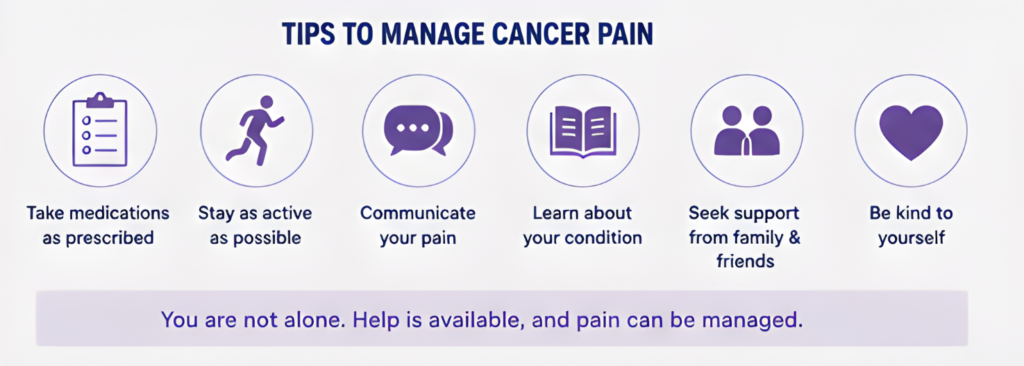
Cancer pain should never be accepted as something that must simply be endured.
Prompt assessment allows healthcare providers to:
- Identify the source of pain
- Select appropriate treatments
- Prevent pain from becoming more difficult to control
- Improve physical function
- Support emotional well-being
- Enhance quality of life throughout cancer treatment
A personalized, multidisciplinary approach gives many patients the best opportunity to achieve meaningful pain relief while continuing their overall cancer care.
Treatment Options for Cancer Pain
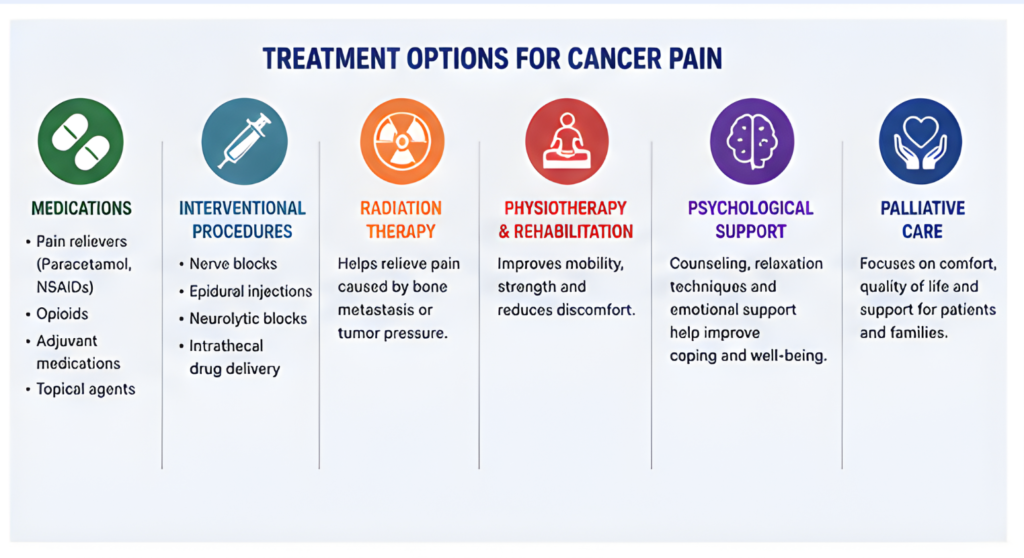
Cancer pain can often be managed effectively with a personalized treatment plan. The choice of treatment depends on several factors, including the type and stage of cancer, the cause of the pain, the patient’s overall health, and individual treatment goals.
In many cases, the best results come from combining different treatment approaches rather than relying on a single option. This multidisciplinary approach helps reduce pain, improve mobility, and enhance overall quality of life.
1. Medications for Cancer Pain
Medications are often the first step in managing cancer pain. The type of medicine recommended depends on the severity and nature of the pain.
A healthcare provider may prescribe:
- Pain-relieving medicines
- Anti-inflammatory medications
- Medicines for nerve-related pain
- Muscle relaxants (when appropriate)
- Medicines to reduce bone-related pain in selected patients
Your doctor will regularly review your medications to ensure they are providing adequate pain relief while minimizing side effects. Never start, stop, or change prescription medicines without medical advice.
2. Interventional Pain Management
If medications alone do not provide sufficient relief or cause significant side effects, minimally invasive pain management procedures may be considered.
These procedures are performed by trained pain specialists and are designed to target the source of pain while helping patients maintain comfort and function.
Nerve Blocks
Nerve blocks involve injecting medication around specific nerves to interrupt pain signals.
They may be beneficial for patients with:
- Cancer-related nerve pain
- Abdominal pain
- Pelvic pain
- Chest pain
- Certain bone pain conditions
Some patients experience relief lasting from days to several months, depending on the underlying condition.
Epidural and Spinal Injections
For pain related to the spine or nerve compression, targeted injections may help reduce inflammation and improve comfort.
These procedures are commonly used when cancer affects the spine or nearby nerves.
Neurolytic Procedures
In carefully selected patients with severe pain, a specialist may recommend procedures that interrupt pain transmission in specific nerves.
These treatments are considered only after a thorough evaluation and when they are appropriate for the patient’s condition.
Intrathecal Drug Delivery Systems
For some patients with complex or difficult-to-control pain, an implanted drug delivery system may be considered by a specialist.
These systems deliver medication directly around the spinal cord, allowing effective pain control with much smaller doses than oral medication.
This option is suitable only for selected patients after careful assessment.
Radiofrequency Procedures
Certain chronic pain conditions may respond to radiofrequency techniques, which use controlled heat to interrupt pain signals from targeted nerves.
Your pain specialist will determine whether this approach is appropriate based on the cause of your pain.
3. Palliative Care
Palliative care is specialized medical care focused on improving quality of life for people living with serious illnesses, including cancer.
Many people mistakenly believe palliative care is only for the final stages of illness. In reality, it can be introduced at any stage of cancer alongside ongoing treatments.
Palliative care focuses on:
- Pain relief
- Symptom management
- Emotional support
- Nutritional guidance
- Psychological well-being
- Family support
- Improving comfort and independence
The goal is to help patients live as comfortably and actively as possible.
4. Physiotherapy and Rehabilitation
Cancer and its treatment can reduce muscle strength, flexibility, and endurance.
A physiotherapy program may help patients:
- Improve mobility
- Reduce stiffness
- Increase muscle strength
- Improve balance
- Reduce fatigue
- Perform daily activities more comfortably
Programs are tailored to each patient’s condition and energy levels.
Gentle movement and supervised exercise often play an important role in recovery and long-term well-being.
5. Psychological and Emotional Support
Living with cancer pain affects more than the body. Persistent pain can contribute to:
- Anxiety
- Depression
- Fear
- Sleep problems
- Social withdrawal
- Emotional distress
Support from psychologists, counsellors, or support groups can help patients develop coping strategies and improve their emotional well-being.
Relaxation techniques, mindfulness, and stress management may also complement medical treatment.
6. Nutrition and Healthy Lifestyle
Good nutrition supports overall health and may help patients maintain strength during cancer treatment.
General recommendations include:
- Eating a balanced diet rich in fruits and vegetables
- Including adequate protein to support muscle health
- Drinking enough fluids
- Eating smaller, frequent meals if appetite is reduced
- Seeking advice from a qualified dietitian if needed
Lifestyle habits such as avoiding tobacco, limiting alcohol where advised, maintaining gentle physical activity, and getting adequate sleep also contribute to better overall health.
7. Managing Cancer Pain at Home
Patients and caregivers play an important role in day-to-day pain management.
Helpful strategies include:
- Taking medications exactly as prescribed
- Keeping a daily pain diary
- Staying physically active within personal limits
- Using supportive pillows or positioning techniques
- Applying heat or cold only if recommended by a healthcare professional
- Practising relaxation and breathing exercises
- Reporting new or worsening symptoms promptly
Open communication with your healthcare team allows treatment to be adjusted as your needs change.
Personalized Pain Management
There is no single treatment that works for every patient.
An individualized treatment plan considers:
- Type of cancer
- Stage of disease
- Cause of pain
- Medical history
- Previous treatments
- Personal goals
- Overall health
Regular follow-up allows healthcare providers to modify the treatment plan as needed, ensuring pain management remains effective throughout the patient’s care journey.
The Importance of a Multidisciplinary Approach
The most effective cancer pain management often involves a team of healthcare professionals working together.
This team may include:
- Oncologists
- Pain medicine specialists
- Palliative care physicians
- Physiotherapists
- Nurses
- Psychologists
- Dietitians
- Rehabilitation specialists
By combining medical expertise with supportive care, patients receive comprehensive treatment that addresses both physical symptoms and emotional well-being.
Living Well Despite Cancer Pain
Pain does not have to define your life.
With timely assessment, evidence-based treatment, and ongoing support, many patients are able to:
- Improve their comfort
- Stay active for longer
- Participate in family life
- Sleep better
- Maintain greater independence
- Experience an improved quality of life
If your current pain management plan is not providing adequate relief, speak with your healthcare team. A review of your symptoms may identify additional treatment options that better meet your needs.
Frequently Asked Questions (FAQs)
1. What is cancer pain?
Cancer pain is pain caused by the cancer itself or by treatments such as surgery, chemotherapy, or radiation therapy. It can range from mild to severe and should always be assessed by a healthcare professional.
2. Can all cancer pain be treated?
Many patients achieve significant pain relief with a personalized treatment plan. While complete pain relief may not always be possible, modern pain management can often improve comfort, function, and quality of life.
3. When should I consult a pain specialist?
You should seek specialist advice if pain persists despite treatment, interferes with sleep or daily activities, or if you experience frequent breakthrough pain or medication side effects.
4. What is breakthrough cancer pain?
Breakthrough pain is a sudden episode of severe pain that occurs even when regular pain medication is otherwise controlling symptoms. Your healthcare team can adjust your treatment plan to help manage these episodes.
5. Is cancer pain always severe?
No. Pain varies widely between individuals. Some patients experience mild discomfort, while others may have moderate or severe pain depending on the type of cancer, its location, and treatment.
6. Can cancer pain be managed without surgery?
Yes. Many patients benefit from medications, physiotherapy, palliative care, counselling, and minimally invasive interventional pain management procedures. Your doctor will recommend the most appropriate approach for your condition.
7. What is palliative care?
Palliative care is specialized medical care that focuses on relieving pain and other symptoms while improving quality of life. It can be provided alongside active cancer treatment at any stage of the illness.
8. Can chemotherapy or radiation cause pain?
Yes. Some cancer treatments may cause temporary pain, inflammation, or nerve-related symptoms. These side effects can often be managed with appropriate medical care.
9. Does emotional health affect cancer pain?
Yes. Stress, anxiety, depression, and poor sleep can increase the perception of pain. Emotional and psychological support is an important part of comprehensive cancer care.
10. Are interventional pain procedures safe?
Many minimally invasive pain procedures are considered safe when performed by trained specialists. Your healthcare provider will discuss the potential benefits and risks before recommending any procedure.
11. Can exercise help during cancer treatment?
Gentle, doctor-approved physical activity and physiotherapy may improve strength, mobility, reduce stiffness, and support overall well-being. Exercise should always be tailored to your individual health condition.
12. How often should my pain management plan be reviewed?
Pain should be reassessed regularly because symptoms and treatment needs may change over time. Ongoing communication with your healthcare team helps ensure the plan remains effective.
13. When should I seek urgent medical attention?
Seek immediate medical care if you experience sudden, severe pain, new weakness, loss of bladder or bowel control, confusion, difficulty breathing, or any rapidly worsening symptoms.
14. Can family members help with pain management?
Yes. Family members and caregivers can assist by monitoring symptoms, encouraging medication adherence, helping maintain a pain diary, and supporting communication with healthcare professionals.
15. Where can I get help for persistent cancer pain?
If you or a loved one is living with ongoing cancer pain, consult a qualified pain management specialist for a comprehensive assessment and a personalized treatment plan.
Why Choose Good Life Clinic?
At Good Life Clinic, we understand that every patient’s journey with cancer is unique. Our approach to cancer pain management focuses on compassionate, individualized care designed to improve comfort, mobility, and quality of life.
Our services include:
- Comprehensive pain assessment
- Personalized treatment planning
- Non-surgical pain management options where appropriate
- Interventional pain management procedures
- Palliative and supportive care
- Guidance for patients and caregivers
- Regular follow-up to review and adjust treatment plans
We work closely with patients, families, and referring doctors to provide care that is evidence-based, respectful, and focused on each patient’s individual needs.
Key Takeaways
- Cancer pain can result from the disease itself or from cancer treatments.
- Pain should never be accepted as something patients simply have to live with.
- Early assessment allows healthcare professionals to identify the cause and recommend appropriate treatment.
- A combination of medications, rehabilitation, palliative care, and interventional pain management may provide meaningful relief.
- Emotional well-being and family support are important parts of comprehensive cancer care.
- Regular follow-up helps ensure that treatment continues to meet changing needs.
Conclusion
Cancer pain can affect every aspect of life, but effective pain management can make a meaningful difference. Modern treatments focus on relieving pain, improving function, and helping patients maintain the best possible quality of life.
Every patient’s needs are different, which is why treatment should always be based on a thorough medical assessment and an individualized care plan. With the right combination of medical expertise, supportive care, rehabilitation, and ongoing follow-up, many patients are able to achieve better comfort and continue participating in the activities that matter most.
If you or someone you care for is experiencing persistent cancer pain, seeking advice from a qualified pain management specialist is an important step toward finding appropriate treatment and support.