
Back pain is one of the leading causes of disability worldwide and affects people of all ages. It can interfere with work, sleep, exercise, and even simple daily activities such as bending, lifting, walking, or sitting for long periods. While many people experience temporary back pain, others develop chronic symptoms that significantly impact their quality of life. Then back pain treatment becomes important.
A common misconception is that persistent back pain always requires surgery. In reality, many cases of back pain can be successfully managed without surgery. Modern pain management focuses on identifying the underlying cause of the pain and creating a personalized treatment plan using evidence-based, non-surgical approaches.
Whether your back pain is caused by poor posture, a slipped disc, arthritis, muscle strain, nerve compression, or age-related changes, early diagnosis and appropriate treatment can help reduce pain, improve mobility, and prevent further complications.
In this guide, you’ll learn about the causes and symptoms of back pain, advanced non-surgical treatment options, recovery strategies, and when you should consult a pain management specialist.
Understanding Back Pain
Back pain refers to discomfort that occurs anywhere along the spine, from the neck to the lower back. However, lower back pain is the most common type because this area supports much of the body’s weight and is involved in almost every movement.
Back pain may:
- Develop suddenly after an injury
- Build up gradually over time
- Be constant or intermittent
- Be mild, moderate, or severe
- Stay in one area or spread to the hips or legs
Some episodes improve within a few weeks, while others continue for months and require specialist evaluation.
Understanding the Spine
The spine is a complex structure that provides support, stability, and flexibility while protecting the spinal cord.
It consists of:
- Vertebrae: Bones that form the spinal column.
- Intervertebral discs: Soft cushions between the vertebrae that absorb shock.
- Facet joints: Small joints that allow smooth movement of the spine.
- Muscles and ligaments: Provide strength and support.
- Spinal nerves: Carry signals between the brain and the rest of the body.
Damage or inflammation affecting any of these structures can lead to back pain.
Types of Back Pain
Understanding the type of pain helps healthcare professionals determine the most appropriate treatment.
Acute Back Pain
Acute back pain lasts for less than six weeks and is commonly caused by muscle strain, minor injuries, or improper lifting.
Many cases improve with conservative treatment and activity modification.
Subacute Back Pain
Subacute pain lasts between six and twelve weeks.
If symptoms continue during this period, further evaluation may be recommended to identify the underlying cause.
Chronic Back Pain
Pain lasting longer than twelve weeks is generally considered chronic back pain.
Common causes include:
- Degenerative disc disease
- Arthritis
- Nerve compression
- Spinal stenosis
- Previous injuries
- Long-term poor posture
Chronic back pain often requires a personalized, multidisciplinary treatment approach.
Common Causes of Back Pain
Back pain can result from many different conditions.
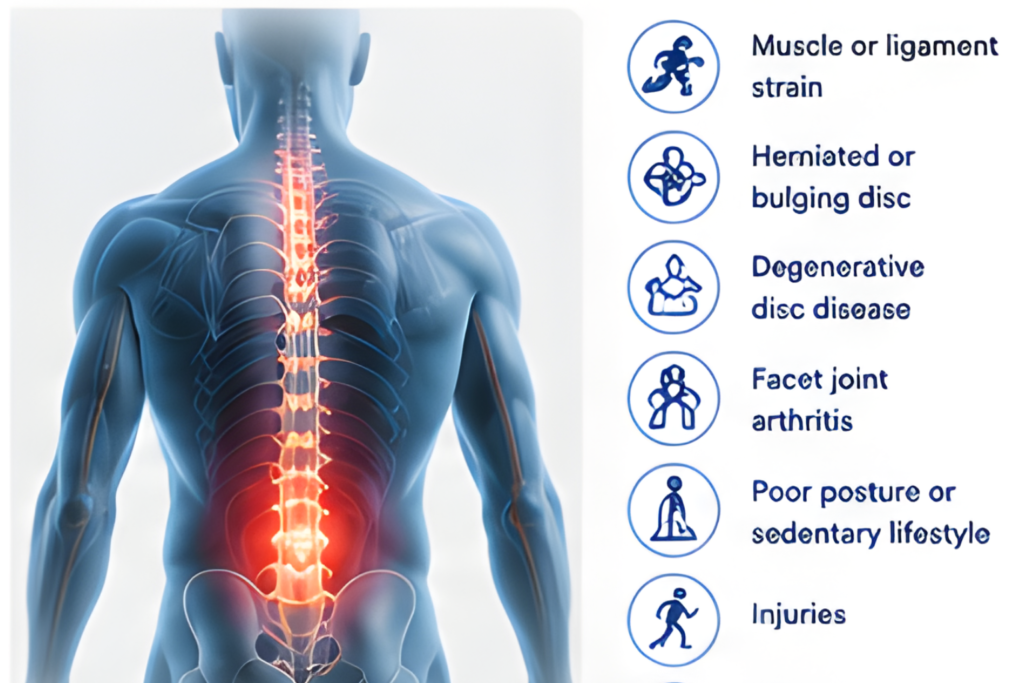
1. Muscle or Ligament Strain
Sudden lifting, awkward movements, repetitive bending, or poor posture can strain the muscles and ligaments supporting the spine.
Symptoms may include:
- Localized pain
- Muscle tightness
- Difficulty bending
- Pain during movement
2. Herniated (Slipped) Disc
The discs between the vertebrae act as shock absorbers.
When a disc bulges or ruptures, it may press on nearby nerves, causing:
- Lower back pain
- Leg pain
- Numbness
- Tingling
- Muscle weakness
Many patients improve with non-surgical treatment.
3. Degenerative Disc Disease
As people age, spinal discs naturally lose water content and flexibility.
This may result in:
- Chronic lower back pain
- Morning stiffness
- Pain during prolonged sitting
- Reduced mobility
4. Osteoarthritis
Arthritis of the spine causes gradual wear and tear of the joints.
Common symptoms include:
- Stiffness
- Pain during movement
- Reduced flexibility
- Difficulty standing for long periods
5. Sciatica
Sciatica occurs when the sciatic nerve becomes irritated or compressed.
Symptoms often include:
- Pain radiating from the lower back into the buttock and leg
- Burning sensation
- Tingling
- Numbness
- Muscle weakness
Sciatica should be evaluated promptly if symptoms are severe or worsening.
6. Spinal Stenosis
Spinal stenosis is the narrowing of the spinal canal, which may compress nerves.
Patients commonly experience:
- Lower back pain
- Leg pain while walking
- Numbness
- Weakness
- Relief when sitting or bending forward
7. Poor Posture
Modern lifestyles often involve prolonged sitting, computer work, and mobile phone use.
Poor posture places continuous stress on the spine and surrounding muscles, contributing to chronic back pain over time.
8. Osteoporosis
Weakening of the bones due to osteoporosis increases the risk of spinal fractures, particularly in older adults.
This can cause sudden or persistent back pain.
Symptoms of Back Pain
Back pain symptoms vary depending on the underlying condition.
Common symptoms include:
- Persistent lower back pain
- Pain between the shoulder blades
- Muscle stiffness
- Difficulty bending or twisting
- Pain after prolonged sitting
- Pain while standing or walking
- Pain that spreads into the hips or legs
- Tingling or numbness
- Muscle weakness
- Reduced flexibility
- Difficulty lifting objects
Some people experience mild discomfort, while others find that pain significantly limits their daily activities.
Risk Factors for Back Pain
Several factors increase the likelihood of developing back pain.
Age
The risk of degenerative spinal conditions increases with age.
Sedentary Lifestyle
Weak back and core muscles provide less support for the spine.
Regular physical activity helps maintain spinal strength and flexibility.
Poor Posture
Long hours of sitting with inadequate back support place additional stress on spinal structures.
Obesity
Excess body weight increases pressure on the lower back and may contribute to chronic pain.
Occupation
Jobs involving:
- Heavy lifting
- Frequent bending
- Repetitive twisting
- Long periods of driving
- Prolonged standing
can increase the risk of developing back pain.
Smoking
Smoking may reduce blood flow to spinal tissues and has been associated with an increased risk of certain spinal conditions.
Stress
Emotional stress can contribute to muscle tension, making existing back pain feel more severe.
Why Early Treatment Matters
Many people ignore back pain until it begins interfering with work, sleep, or everyday activities.
Delaying medical evaluation may allow some underlying conditions to progress, making symptoms more difficult to manage.
Early assessment helps healthcare professionals identify the cause of the pain and recommend appropriate non-surgical treatment before complications develop.
With timely care, many patients experience improved mobility, reduced pain, and a better quality of life without the need for surgery.
How Is Back Pain Diagnosed?
Effective treatment begins with identifying the exact cause of your back pain. While many cases improve with conservative care, persistent or severe symptoms require a detailed medical evaluation to rule out underlying conditions such as a herniated disc, spinal stenosis, arthritis, fractures, or nerve compression.
A comprehensive diagnosis allows your healthcare provider to create a treatment plan that targets the source of the pain rather than simply relieving symptoms.
Medical History
Your doctor will begin by asking questions about your symptoms, including:
- When did the pain start?
- Did it begin after an injury or gradually over time?
- Where is the pain located?
- Does the pain spread to your hips, buttocks, or legs?
- Is the pain worse while sitting, standing, walking, or sleeping?
- Have you experienced numbness or weakness?
- Have you had previous back injuries or surgery?
- What treatments or medications have you already tried?
These details help narrow down the possible causes of your symptoms.
Physical Examination
A physical examination provides valuable information about how your spine and nerves are functioning.
Your healthcare provider may assess:
- Posture and spinal alignment
- Range of motion
- Muscle strength
- Reflexes
- Sensation in the legs and feet
- Walking pattern (gait)
- Areas of tenderness
- Balance and coordination
Certain movement tests may also help identify whether the pain originates from muscles, joints, discs, or nerves.
Imaging Tests
If your symptoms persist or a more serious condition is suspected, imaging studies may be recommended.
X-rays
X-rays help identify:
- Bone fractures
- Arthritis
- Bone spurs
- Spinal alignment problems
However, X-rays do not clearly show muscles, discs, or nerves.
MRI (Magnetic Resonance Imaging)
MRI provides detailed images of the spine and surrounding soft tissues.
It is commonly used to detect:
- Herniated (slipped) discs
- Nerve compression
- Spinal stenosis
- Ligament injuries
- Infections
- Certain spinal tumors
MRI is often recommended when pain persists despite treatment or when nerve-related symptoms are present.
CT Scan
A CT scan provides detailed images of bones and may be useful when evaluating complex spinal fractures or other bony abnormalities.
Laboratory Tests
Blood tests may be recommended if your healthcare provider suspects:
- Infection
- Autoimmune disease
- Inflammatory arthritis
- Certain metabolic conditions
These tests help identify conditions that require specific medical treatment.
Common Conditions That Cause Back Pain
Understanding the cause of back pain helps determine the most appropriate treatment approach.
Muscle Strain
One of the most common causes of back pain, muscle strain often develops after:
- Heavy lifting
- Sudden twisting
- Overuse
- Poor posture
Symptoms usually improve with appropriate treatment and gradual return to activity.
Herniated (Slipped) Disc
A herniated disc occurs when the soft inner portion of a spinal disc pushes outward and irritates nearby nerves.
Symptoms may include:
- Lower back pain
- Pain radiating down the leg
- Tingling
- Numbness
- Muscle weakness
Many patients improve with non-surgical treatment.
Sciatica
Sciatica results from irritation or compression of the sciatic nerve.
Common symptoms include:
- Pain travelling from the lower back into the buttock and leg
- Burning pain
- Tingling
- Numbness
- Weakness
Early assessment helps determine the most appropriate treatment.
Spinal Stenosis
Spinal stenosis occurs when the spinal canal narrows, placing pressure on the nerves.
Patients often report:
- Lower back pain
- Leg pain while walking
- Numbness
- Weakness
- Relief when sitting or leaning forward
Facet Joint Arthritis
The facet joints connect the vertebrae and help the spine move smoothly.
Age-related wear and tear or arthritis affecting these joints may cause:
- Localized back pain
- Morning stiffness
- Pain during twisting or standing
Sacroiliac (SI) Joint Dysfunction
The sacroiliac joints connect the spine to the pelvis.
Pain from these joints may be felt in:
- The lower back
- Buttocks
- Groin
- Upper thigh
Diagnosis often requires a detailed examination because symptoms may resemble other back conditions.
When Should You See a Doctor?
While many mild episodes improve with rest and activity modification, medical evaluation is recommended if you experience:
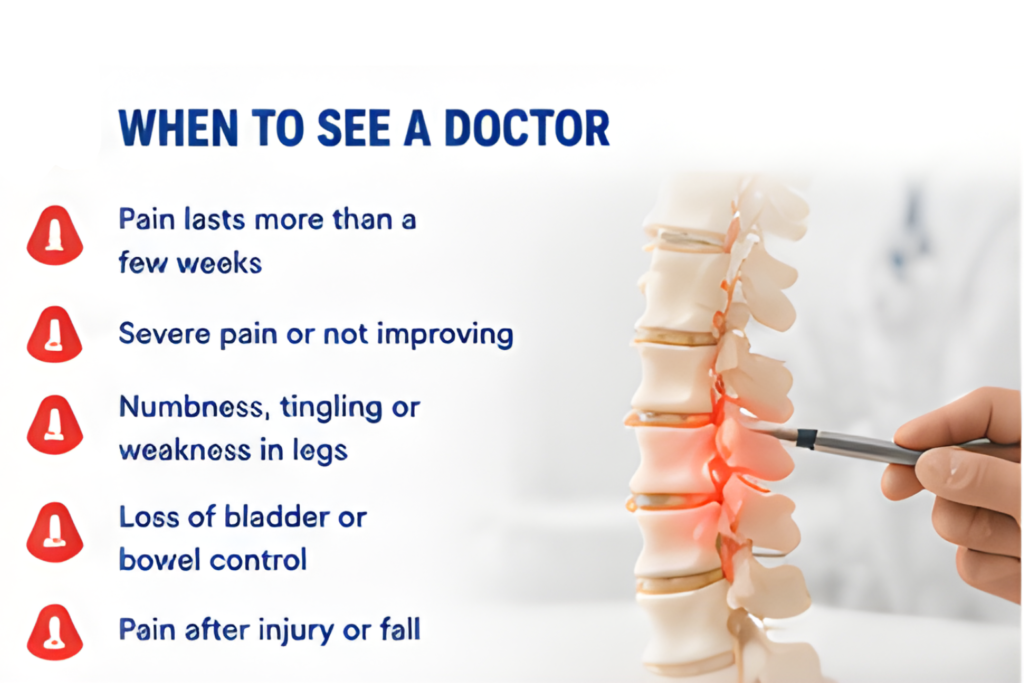
- Pain lasting longer than two to four weeks
- Pain that continues despite home treatment
- Difficulty walking
- Pain spreading into one or both legs
- Numbness or tingling
- Muscle weakness
- Pain interfering with sleep
- Recurrent episodes of back pain
Early assessment may help prevent chronic pain and improve long-term outcomes.
Warning Signs That Need Immediate Medical Attention
Seek urgent medical care if you experience:
- Sudden severe back pain after a major fall or accident
- Loss of bladder or bowel control
- Significant weakness in one or both legs
- Numbness around the groin or buttocks (saddle numbness)
- Fever with severe back pain
- Unexplained weight loss accompanied by persistent back pain
- Severe pain that is rapidly worsening
These symptoms may indicate a serious medical condition requiring prompt evaluation.
Why Early Treatment Matters
Many people assume back pain is simply part of ageing or hope it will disappear on its own.
However, delaying treatment may lead to:
- Reduced mobility
- Persistent muscle weakness
- Ongoing nerve irritation
- Chronic pain
- Reduced quality of life
Early diagnosis allows healthcare professionals to recommend treatments that address the underlying cause and reduce the risk of long-term complications.
Getting the Right Diagnosis Is the First Step Toward Recovery
Successful back pain treatment starts with understanding why the pain is occurring.
A detailed medical assessment helps your healthcare provider determine the most appropriate treatment based on your symptoms, medical history, lifestyle, and overall health.
With early diagnosis and evidence-based care, many patients can successfully manage back pain, improve mobility, and return to their normal daily activities without surgery.
Non-Surgical Treatment for Back Pain
The good news is that most people with back pain do not require surgery. Many conditions can be managed successfully with a combination of medication, physiotherapy, lifestyle changes, and advanced interventional pain management procedures.
The most appropriate treatment depends on the underlying cause of your pain, its severity, your daily activities, and your overall health.
The goals of treatment are to:
- Reduce pain and inflammation
- Improve mobility and flexibility
- Restore normal daily function
- Strengthen the muscles supporting the spine
- Prevent future episodes of back pain
- Improve overall quality of life
1. Medications
Medications may help relieve pain, reduce inflammation, and improve movement, especially during the early stages of treatment.
Depending on your diagnosis, your healthcare provider may recommend:
- Pain-relieving medicines
- Anti-inflammatory medications
- Muscle relaxants (when appropriate)
- Medicines for nerve-related pain
- Topical creams or gels
Medication should always be used under medical supervision and reviewed regularly to ensure it remains appropriate for your condition.
2. Physiotherapy and Rehabilitation
Physiotherapy is one of the most effective treatments for many back pain conditions.
A personalized rehabilitation program may help:
- Strengthen core muscles
- Improve posture
- Increase flexibility
- Reduce muscle stiffness
- Improve spinal stability
- Restore normal movement patterns
A physiotherapist may recommend:
- Core strengthening exercises
- Stretching exercises
- Walking programs
- Balance training
- Posture correction
- Ergonomic advice
- Manual therapy, where appropriate
Regular exercise and adherence to the rehabilitation program are often key to long-term recovery.
3. Lifestyle Changes
Healthy daily habits can significantly reduce back pain and lower the risk of recurrence.
Helpful changes include:
- Maintaining a healthy body weight
- Staying physically active
- Avoiding prolonged bed rest
- Taking movement breaks during long periods of sitting
- Using proper lifting techniques
- Sleeping on a supportive mattress
- Wearing supportive footwear
- Managing stress effectively
Small improvements in daily habits often have a lasting impact on spinal health.
4. Ergonomic Improvements
Poor workplace ergonomics are a common cause of chronic back pain.
Simple adjustments may include:
- Keeping your computer screen at eye level
- Sitting with proper back support
- Keeping your feet flat on the floor
- Avoiding prolonged sitting
- Using a standing desk when appropriate
- Taking short stretching breaks every 30–60 minutes
Good posture reduces unnecessary strain on the spine and surrounding muscles.
5. Image-Guided Spine Injections
For patients whose symptoms do not improve with conservative treatment, image-guided procedures may be considered.
These minimally invasive treatments use imaging guidance to improve precision and help target the affected area.
The choice of procedure depends on the underlying diagnosis and should always be based on a detailed medical evaluation.
Epidural Steroid Injections
Epidural injections may help reduce inflammation around irritated spinal nerves.
They are commonly considered for carefully selected patients with:
- Sciatica
- Herniated discs
- Lumbar radiculopathy
- Spinal stenosis
These injections are intended to reduce pain and improve function as part of a broader treatment plan.
Facet Joint Injections
Facet joints are small joints in the spine that may become painful due to arthritis or age-related wear.
Facet joint injections may help identify and manage pain arising from these joints in selected patients.
Sacroiliac (SI) Joint Injections
Pain originating from the sacroiliac joints may respond to targeted injections when clinical evaluation indicates they are the source of symptoms.
Selective Nerve Root Blocks
When a specific spinal nerve is suspected to be causing pain, a selective nerve root block may assist in diagnosis and, in some cases, provide temporary symptom relief.
Radiofrequency Ablation (RFA)
For selected patients who respond well to diagnostic nerve blocks, radiofrequency ablation may be recommended.
This procedure uses controlled heat to interrupt pain signals from specific nerves and may provide longer-lasting relief for certain chronic back pain conditions.
Suitability varies and should be determined by a qualified pain specialist.
6. Managing Back Pain at Home
Home care plays an important role in recovery.
General recommendations include:
- Continue gentle daily movement
- Follow your prescribed exercise program
- Avoid lifting heavy objects during recovery
- Apply heat or cold therapy if advised
- Maintain good posture throughout the day
- Avoid prolonged sitting without breaks
- Take medications exactly as prescribed
Long periods of complete bed rest are generally not recommended for most people with non-specific back pain.
Recovery After Non-Surgical Treatment
Recovery time depends on:
- The underlying cause of the pain
- Severity of symptoms
- General health
- Consistency with rehabilitation
- Lifestyle factors
Many patients notice gradual improvement over several weeks or months when they follow their treatment plan and attend scheduled follow-up appointments.
The focus of recovery is not only pain relief but also restoring strength, flexibility, confidence, and independence.
Preventing Future Back Pain
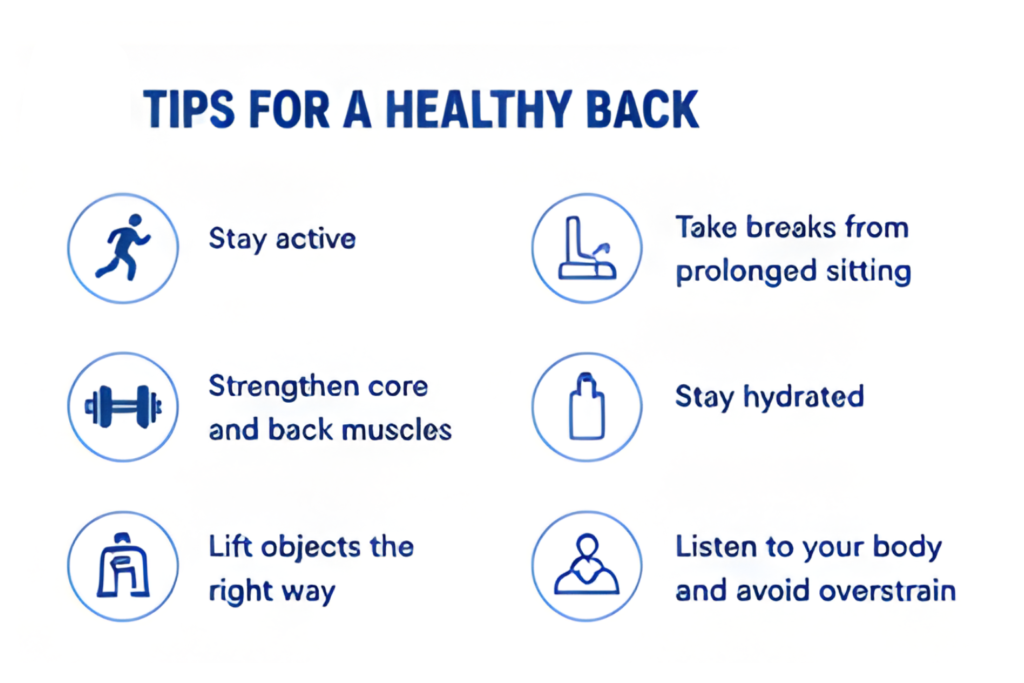
Although not all back pain can be prevented, these healthy habits may reduce your risk:
- Exercise regularly
- Strengthen your core muscles
- Maintain a healthy weight
- Practice good posture
- Lift objects correctly
- Stretch before physical activity
- Avoid smoking
- Stay active throughout the day
- Manage stress effectively
Preventive care is an important part of maintaining long-term spinal health.
A Personalized Treatment Plan Delivers the Best Results
Every patient experiences back pain differently.
The most effective treatment plan considers:
- The exact diagnosis
- Pain severity
- Age
- Occupation
- Activity level
- Medical history
- Personal treatment goals
By combining evidence-based medical care, rehabilitation, lifestyle modifications, and minimally invasive pain management procedures when appropriate, many patients can successfully manage back pain without surgery.
Early diagnosis and personalized care provide the best opportunity to reduce pain, restore movement, and improve overall quality of life.
Frequently Asked Questions (FAQs)
1. Can back pain be treated without surgery?
Yes. Many cases of back pain improve with non-surgical treatments such as physiotherapy, medications, lifestyle modifications, and minimally invasive pain management procedures. The most appropriate treatment depends on the underlying cause of the pain.
2. When should I see a pain specialist for back pain?
You should seek medical advice if your back pain lasts longer than two to four weeks, keeps returning, spreads into your legs, or affects your daily activities, sleep, or work.
3. What is the most common cause of lower back pain?
Muscle strain, poor posture, herniated (slipped) discs, arthritis, degenerative disc disease, and sciatica are among the most common causes of lower back pain.
4. Can a slipped disc heal without surgery?
Many people with a herniated (slipped) disc improve with non-surgical treatment, including physiotherapy, medication, activity modification, and, in selected cases, image-guided pain management procedures.
5. What is sciatica?
Sciatica is pain caused by irritation or compression of the sciatic nerve. It usually travels from the lower back into the buttock and down one leg, sometimes accompanied by tingling, numbness, or weakness.
6. How long does recovery from back pain take?
Recovery depends on the cause and severity of the condition. Some people recover within a few weeks, while others require longer-term rehabilitation and follow-up.
7. Is bed rest recommended for back pain?
For most people, prolonged bed rest is not recommended. Gentle movement and gradual return to normal activities are usually encouraged, unless advised otherwise by your healthcare provider.
8. Can physiotherapy help chronic back pain?
Yes. Physiotherapy is one of the most effective non-surgical treatments for many types of back pain. It improves flexibility, strengthens supporting muscles, and helps restore normal movement.
9. Are spine injections safe?
Image-guided spine injections are commonly performed for selected patients. Your pain specialist will discuss the expected benefits, possible risks, and whether the procedure is suitable for your condition.
10. Can poor posture cause back pain?
Yes. Poor posture during sitting, standing, or lifting can place additional stress on the spine and surrounding muscles, contributing to persistent back pain over time.
11. What exercises help reduce back pain?
Exercises that strengthen the core muscles, improve flexibility, and support posture may help. The most appropriate exercise program depends on your diagnosis and should ideally be guided by a healthcare professional.
12. How can I prevent future episodes of back pain?
Regular exercise, maintaining a healthy weight, practicing good posture, lifting objects correctly, avoiding smoking, and staying physically active can help reduce the risk of recurring back pain.
13. When should I seek emergency medical attention?
Seek immediate medical care if you experience sudden severe back pain after major trauma, loss of bladder or bowel control, significant leg weakness, saddle numbness, fever with severe back pain, or rapidly worsening symptoms.
14. Can stress make back pain worse?
Yes. Stress can contribute to muscle tension and increase the perception of pain. Managing stress through healthy lifestyle habits may complement your medical treatment.
15. Can older adults benefit from non-surgical back pain treatment?
Yes. Many older adults successfully manage back pain with individualized treatment plans that may include rehabilitation, lifestyle modifications, medications, and minimally invasive procedures when appropriate.
Why Choose Good Life Clinic?
At Good Life Clinic, we understand that back pain affects more than just your spine—it can impact your work, sleep, mobility, and overall quality of life.
Our approach focuses on identifying the root cause of your pain and creating a personalized treatment plan designed to improve movement, reduce discomfort, and help you return to your daily routine.
Our services include:
- Comprehensive back pain evaluation
- Personalized treatment planning
- Non-surgical pain management options where appropriate
- Image-guided interventional pain procedures
- Physiotherapy and rehabilitation guidance
- Long-term follow-up and patient education
Our goal is to provide evidence-based, compassionate care tailored to each patient’s individual needs.
Key Takeaways
- Back pain has many possible causes, including muscle strain, arthritis, herniated discs, and nerve compression.
- Early diagnosis is essential for selecting the most appropriate treatment.
- Most patients with back pain do not require surgery.
- Physiotherapy, lifestyle modifications, and minimally invasive pain management procedures play an important role in recovery.
- Maintaining good posture, regular exercise, and a healthy weight can help reduce the risk of future back problems.
- Personalized care provides the best opportunity for long-term pain relief and improved mobility.
Conclusion
Back pain is common, but it should never be ignored if it persists or interferes with your daily life.
Advances in modern pain medicine mean that many patients can successfully manage back pain without surgery. By combining accurate diagnosis, personalized treatment, rehabilitation, and healthy lifestyle habits, it is often possible to reduce pain, restore function, and improve quality of life.
If you have been living with persistent back pain, consult a qualified pain management specialist. A comprehensive assessment can help identify the underlying cause and determine the most appropriate treatment options for your individual needs.