
A slip disc can be frightening, especially when an MRI report mentions a disc bulge, disc herniation or nerve compression. Many people immediately assume that they will need spine surgery.
The good news is that surgery is not the first treatment for many people with a slipped or herniated disc. Depending on the severity of symptoms and whether there is significant nerve compression or neurological weakness, treatment may begin with conservative and non-surgical approaches such as appropriate medication, physical therapy, activity modification and, for selected patients, image-guided spinal injections.
However, “treatment without surgery” does not mean ignoring the condition or trying random exercises at home. The right treatment depends on the location of the disc problem, symptoms, neurological examination and how the condition affects your daily life.
This guide explains slip disc treatment without surgery, including symptoms, diagnosis, physiotherapy, medicines, spinal injections, lifestyle changes, recovery, exercises, warning signs and when surgery may actually be necessary.
What Is a Slip Disc?
“Slip disc” is a commonly used term for a herniated disc.
Your spine contains individual bones called vertebrae. Between many of these vertebrae are flexible discs that act as cushions and help absorb forces during movement.
Each disc has a softer inner portion surrounded by a stronger outer layer. A herniated disc occurs when part of the softer inner material pushes through a weakness or tear in the outer layer.
If the disc does not affect a nearby nerve, a person may have little or no symptoms. If it irritates or compresses a nerve, it can cause pain, tingling, numbness or weakness.
A herniated disc can occur anywhere along the spine but is particularly common in the lower back.
Slip Disc vs Disc Bulge
These terms are sometimes used interchangeably by patients, but they are not exactly the same.
A disc bulge generally describes the disc extending beyond its normal boundary, while a herniated disc involves displacement of disc material through a weakened or torn outer layer.
Importantly, an MRI finding does not automatically mean that it is the source of your pain.
This is why a proper clinical examination is important.
What Are the Symptoms of a Slip Disc?
Symptoms depend on the location of the affected disc and whether a spinal nerve is irritated or compressed.
Common symptoms can include:
- Lower back pain
- Pain spreading into the buttock or leg
- Sciatica
- Tingling
- Numbness
- Burning or electric-shock-like pain
- Muscle weakness
- Difficulty sitting for long periods
- Pain that becomes worse with certain movements
- Difficulty walking because of pain
A lumbar disc problem may cause symptoms extending down one leg, while a cervical disc problem can cause pain, numbness or weakness involving the neck, shoulder, arm or hand.
Does Every Slip Disc Cause Pain?
No.
Some people have a herniated disc without experiencing symptoms.
This is one reason doctors should not make treatment decisions based only on an MRI report. The scan needs to be interpreted alongside the patient’s symptoms and physical examination.
Can Slip Disc Be Treated Without Surgery?
Yes, many cases can be managed without surgery.
For many patients, initial treatment involves conservative care. This may include appropriate medication, activity modification, physical therapy and other non-surgical interventions depending on the cause and severity of symptoms.
Mayo Clinic notes that many people improve with conservative treatment and that most people with herniated discs do not need surgery.
However, there is no single treatment that works for everyone.
A person with mild back pain and no neurological symptoms may require a very different approach from someone experiencing severe sciatica, numbness or progressive weakness.
Slip Disc Treatment Without Surgery: What Are the Options?
Non-surgical treatment is usually based on the individual’s symptoms and diagnosis.
Common approaches include:
- Activity modification
- Medicines prescribed by a doctor
- Physiotherapy
- Targeted exercises
- Posture and movement correction
- Weight and lifestyle management
- Image-guided spinal injections for selected patients
- Interventional pain-management procedures
- Follow-up and rehabilitation
Let’s look at each approach.
1. Avoid Prolonged Bed Rest
One of the most common misconceptions about slip disc treatment is that you should remain in bed until the pain disappears.
In many cases, prolonged bed rest is not recommended.
Mayo Clinic advises against too much bed rest because prolonged inactivity can lead to stiffness and muscle weakness. Instead, patients are generally encouraged to gradually resume appropriate movement while avoiding activities that worsen their symptoms.
This does not mean you should push through severe pain.
Your activity should be adjusted according to your symptoms and your healthcare professional’s advice.
What Can You Do During Recovery?
Depending on your condition, your doctor or physiotherapist may recommend:
- Short walks
- Gentle movement
- Changing positions regularly
- Avoiding prolonged sitting
- Avoiding heavy lifting initially
- Gradually increasing activity
The objective is to remain appropriately active without aggravating the affected nerve or spine.
2. Medicines for Slip Disc Pain
Medicines may be used to control pain and inflammation while the underlying condition improves.
Depending on your symptoms and medical history, a doctor may consider medicines such as:
- Pain relievers
- Anti-inflammatory medicines
- Medicines for nerve-related pain
- Muscle relaxants in selected situations
The appropriate medicine depends on factors such as age, other medical conditions, other medicines being taken and the type of pain.
Mayo Clinic lists pain medicines, certain nerve-pain medicines and muscle relaxants among conservative treatment options for herniated discs.
Important
Do not start prescription medicines on your own.
Even commonly used pain medicines can have contraindications, interactions and side effects.
A pain specialist can help determine which medication, if any, is appropriate for your condition.
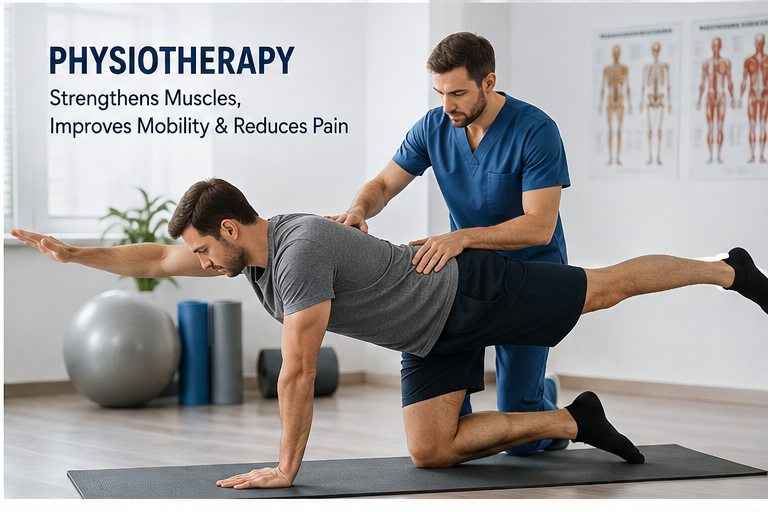
3. Physiotherapy for Slip Disc
Physiotherapy is an important part of non-surgical slip disc treatment.
A physiotherapist can develop a program based on your symptoms, mobility and physical examination.
Treatment may focus on:
- Improving spinal movement
- Strengthening the core
- Improving flexibility
- Improving posture
- Restoring functional movement
- Gradually returning to normal activities
Mayo Clinic notes that physical therapy may include stretches and exercises designed to strengthen the core, reduce pain and improve movement.
Why Is Core Strength Important?
Your abdominal, back and hip muscles help support your spine.
Improving strength and movement control can help you return to normal activities and may reduce the risk of future episodes when combined with appropriate lifestyle habits.
However, exercises should be individualized.
An exercise that helps one patient may aggravate another patient’s symptoms.
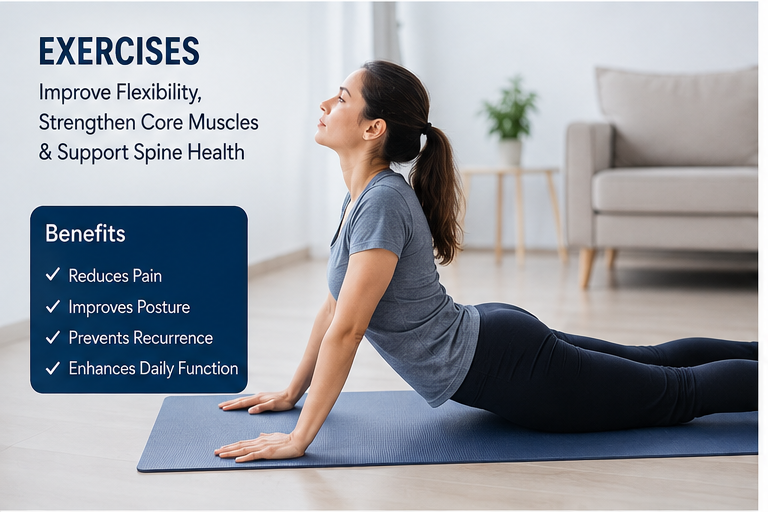
4. Exercises for Slip Disc
Exercise can be helpful during recovery, but there is no universal slip disc exercise routine.
The right exercises depend on:
- Location of the disc problem
- Severity of symptoms
- Whether a nerve is compressed
- Your strength and mobility
- Whether movement centralizes or aggravates symptoms
Your physiotherapist may recommend carefully selected exercises such as:
- Gentle mobility exercises
- Core stabilization
- Hip strengthening
- Flexibility exercises
- Posture-related exercises
- Gradual functional strengthening
Exercises to Avoid During Severe Pain
Until you have been assessed, be cautious with activities involving:
- Heavy lifting
- Repeated bending
- Forceful twisting
- High-impact exercise
- Exercises that significantly increase leg pain or numbness
If an exercise causes worsening pain, increasing numbness or new weakness, stop and seek professional guidance.
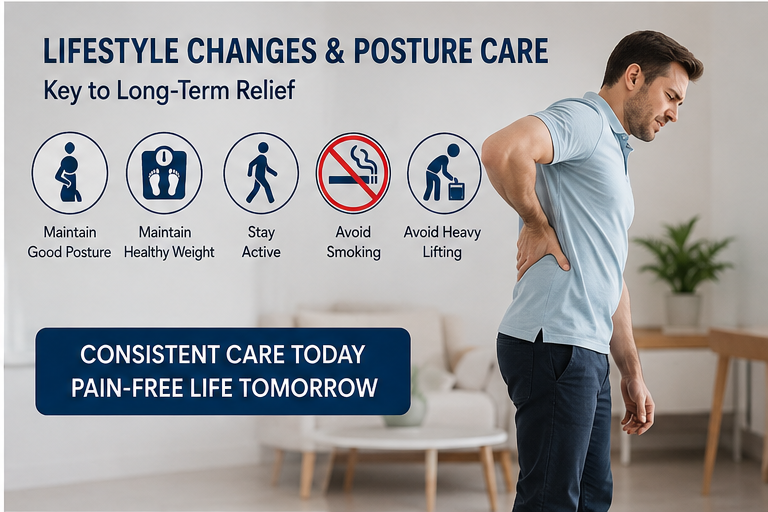
5. Posture Correction
Poor posture does not explain every case of slip disc, but prolonged awkward positions can aggravate back and neck symptoms.
If you sit for long periods:
- Keep your back supported
- Avoid staying in one position for too long
- Adjust your workstation
- Keep your screen at an appropriate height
- Take regular movement breaks
- Avoid repeatedly bending forward for long periods
Good posture is not about maintaining one rigid position all day.
It is more useful to develop comfortable movement habits and avoid prolonged static positions.
6. Weight Management and Lifestyle Changes
Maintaining a healthy body weight can reduce mechanical stress on the spine.
Regular physical activity can also help improve:
- Muscle strength
- Mobility
- Cardiovascular health
- General physical conditioning
Smoking is another important lifestyle factor. Mayo Clinic notes that smoking and tobacco use can weaken spinal discs and increase the risk of herniated discs.
A healthy lifestyle should therefore be considered part of long-term spine care rather than simply a temporary treatment.
7. Spinal Injections for Slip Disc
When pain is severe or does not improve adequately with conservative treatment, a pain specialist may consider a targeted spinal injection for selected patients.
Depending on the diagnosis, an injection may be used to deliver medication near an irritated spinal nerve.
For patients with sciatica caused by nerve irritation from a herniated disc, an image-guided injection may help reduce inflammation and pain.
Mayo Clinic lists steroid injections near an affected nerve as one possible treatment when oral medicines have not provided adequate improvement.
Why Are Image-Guided Injections Used?
The spine contains important nerves and other structures.
Using imaging guidance can help the specialist accurately position the needle at the intended treatment location.
The exact technique depends on the suspected pain generator and the patient’s clinical findings.
8. Interventional Pain Management for Slip Disc
Interventional pain management may be considered when a patient continues to experience significant pain despite appropriate conservative treatment.
Depending on the diagnosis, treatment may involve:
- Nerve blocks
- Image-guided spinal injections
- Epidural-related procedures
- Other minimally invasive pain-management techniques
The purpose is not simply to “hide” the pain.
The treatment plan should address the suspected source of symptoms while supporting rehabilitation and functional recovery.
At Good Life Pain Clinic, Dr. Akanksha Bansal describes an individualized approach to chronic pain, with treatment options that include minimally invasive procedures performed under ultrasound or C-arm guidance. The clinic lists back pain and sciatica among the conditions it manages.
9. Can a Slip Disc Heal Naturally?
In many cases, symptoms associated with a herniated disc improve over time.
The body can reduce inflammation around the affected nerve, and some disc herniations may shrink or regress.
This is one reason conservative treatment is commonly tried first when there are no serious neurological warning signs.
However, “healing naturally” does not mean you should ignore persistent symptoms.
If pain, numbness or weakness continues, a medical assessment can help determine whether the diagnosis and treatment plan need to be reconsidered.
How Is Slip Disc Diagnosed?
Diagnosis usually begins with a detailed medical history and physical examination.
A healthcare professional may assess:
- Pain location
- Pain radiation
- Muscle strength
- Reflexes
- Sensation
- Walking ability
- Range of movement
- Neurological symptoms
Mayo Clinic notes that a physical examination and medical history may be enough in many cases, while imaging may be required when the clinician needs more information about the disc or affected nerves.
Is MRI Necessary for Every Slip Disc?
No.
An MRI can provide detailed images of spinal discs and nerves, but not everyone with back pain needs immediate imaging.
MRI may be considered when:
- Symptoms are persistent
- There are neurological symptoms
- The diagnosis is uncertain
- Treatment is not working as expected
- A procedure is being considered
- Serious pathology needs to be ruled out
An MRI can show where a disc herniation is located and which nerves may be affected.
Important: MRI Findings Do Not Always Equal Symptoms
A person may have a disc bulge or herniation visible on MRI without experiencing pain.
Therefore, treatment should be based on the combination of:
Symptoms + examination + relevant imaging + clinical judgment.
How Long Does It Take to Recover From a Slip Disc Without Surgery?
Recovery time varies.
Some patients experience meaningful improvement over days or weeks, while others may require longer rehabilitation.
Factors affecting recovery include:
- Severity of the disc problem
- Degree of nerve irritation
- Duration of symptoms
- Overall physical condition
- Activity level
- Treatment adherence
- Presence of neurological deficits
- Underlying spinal conditions
Mayo Clinic states that conservative treatment often helps lessen symptoms over days or weeks, although individual recovery varies.
Rather than focusing only on a fixed number of days, it is better to monitor whether symptoms are progressively improving.
What Should You Avoid During Slip Disc Recovery?
During the painful phase, avoid activities that significantly aggravate symptoms.
Depending on your condition, these may include:
- Heavy lifting
- Repeated bending
- Sudden twisting
- High-impact activity
- Prolonged sitting
- Poor lifting technique
- Unsupervised aggressive exercises
You should also avoid prolonged complete bed rest unless specifically advised for a medical reason.
Gradual, controlled movement is generally preferable to remaining inactive for long periods.
Can Massage Cure a Slip Disc?
Massage may provide temporary relief from muscle tension or discomfort for some people, but it does not necessarily correct a herniated disc or nerve compression.
Mayo Clinic notes that massage may provide short-term relief for some people with chronic low back pain.
If you have significant leg pain, numbness or weakness, relying solely on massage without proper assessment may delay appropriate treatment.
Can Chiropractic Treatment Cure a Slip Disc?
Some people use spinal manipulation or other complementary treatments for back pain.
However, treatment should be individualized and performed by an appropriately qualified professional.
Mayo Clinic notes that chiropractic treatment may help some people with longer-term low back pain, while also highlighting potential risks associated with certain neck manipulations.
Patients with neurological symptoms should seek an appropriate medical assessment rather than relying solely on alternative treatment.
When Is Surgery Necessary for a Slip Disc?
The phrase “without surgery” should not be interpreted as “surgery is never needed.”
Surgery may be considered when:
- Pain remains severe despite appropriate non-surgical treatment
- Symptoms do not improve over an appropriate period
- Significant or progressive muscle weakness develops
- Walking or standing becomes difficult
- There is serious neurological compromise
- Bladder or bowel function is affected
Mayo Clinic notes that surgery may be recommended when symptoms do not improve after around six weeks or when there is serious pain, significant weakness, difficulty walking or loss of bladder/bowel control.
The exact decision depends on the patient’s clinical situation.
Slip Disc Red Flags: When Should You Seek Urgent Medical Attention?
Some symptoms should not be managed at home.
Seek urgent medical evaluation if you experience:
- New loss of bladder control
- New loss of bowel control
- Difficulty urinating
- Numbness around the inner thighs, buttocks or genital region
- Severe or rapidly progressing weakness
- Significant difficulty walking
- Severe neurological symptoms
These can indicate serious nerve compression and require urgent assessment.
Mayo Clinic specifically identifies bladder or bowel problems and significant neurological symptoms as important warning signs associated with herniated discs.
Can Slip Disc Be Treated Without Surgery in Every Patient?
No.
The appropriate treatment depends on the individual.
A patient with mild symptoms may improve with:
Activity modification → medication → physiotherapy → gradual rehabilitation
A patient with persistent nerve pain may require:
Assessment → imaging when appropriate → targeted intervention → rehabilitation
A patient with progressive neurological weakness or bladder/bowel symptoms may require urgent specialist evaluation and potentially surgery.
This is why getting the diagnosis right is more important than choosing a treatment simply because it is “non-surgical.”
Why Choose Good Life Pain Clinic for Non-Surgical Slip Disc Treatment?
Good Life Pain Clinic in Vadodara focuses on pain and palliative care and lists back pain and sciatica among the conditions it manages.
Dr. Akanksha Bansal is a pain and palliative specialist with an MBBS, MD in Anaesthesia, FIAPM fellowship in Pain Medicine and European Diploma in Pain Medicine. The clinic describes her approach as starting with detailed history-taking and examination, followed by an individualized treatment plan.
The clinic also describes minimally invasive pain procedures performed under ultrasound and C-arm guidance, including spinal procedures, depending on the patient’s condition.
This approach can be useful for patients who want to understand their treatment options before considering surgery.
However, whether a patient can safely avoid surgery depends on the diagnosis, neurological findings and response to treatment.
Frequently Asked Questions About Slip Disc Treatment Without Surgery
1. Can a slip disc be treated without surgery?
Yes. Many people with herniated discs improve with non-surgical treatment such as appropriate medication, physical therapy, activity modification and, in selected cases, targeted injections.
2. How can I treat a slip disc naturally?
Recovery may involve staying appropriately active, avoiding aggravating activities, following a structured rehabilitation program, maintaining healthy weight and improving movement habits. Natural recovery should still be monitored by a healthcare professional when symptoms are significant or persistent.
3. Is walking good for a slip disc?
Gentle walking may be appropriate for many patients, provided it does not significantly worsen symptoms. Prolonged inactivity can contribute to stiffness and weakness.
4. Can physiotherapy cure a slip disc?
Physiotherapy can help reduce symptoms, improve movement and restore strength and function. Whether the disc itself changes depends on the individual condition. A physiotherapist should tailor exercises to your symptoms.
5. Can a slip disc heal without surgery?
Many people improve without surgery. The exact recovery depends on the severity of the disc problem and whether nerves are significantly affected.
6. Is MRI required for a slip disc?
Not always. A healthcare professional may diagnose a herniated disc based on symptoms and physical examination. MRI may be recommended when additional information is needed.
7. How long does a slip disc take to heal?
There is no universal recovery period. Some people improve within days or weeks, while others require longer treatment and rehabilitation.
8. Can injections treat slip disc pain?
For selected patients, image-guided injections near an irritated spinal nerve may help reduce pain and inflammation. They should only be recommended after appropriate assessment.
9. Can massage fix a slipped disc?
Massage may provide short-term relief for some back-pain patients but should not be considered a guaranteed treatment for a herniated disc.
10. When does a slip disc require surgery?
Surgery may be considered when severe symptoms persist despite appropriate non-surgical treatment or when significant neurological problems develop. Loss of bladder or bowel control requires urgent medical evaluation.
11. Can a slip disc cause sciatica?
Yes. A herniated disc can irritate or compress a spinal nerve and cause pain that travels from the lower back into the buttock and leg.
12. Should I take complete bed rest for a slip disc?
Usually, prolonged bed rest is not recommended. Appropriate movement and gradual return to activity are generally preferred, unless your doctor gives different instructions.
The Bottom Line: Slip Disc Does Not Always Mean Surgery
A slip disc diagnosis can sound serious, but surgery is not automatically required.
For many patients, the first step is accurate diagnosis followed by an individualized non-surgical treatment plan.
Depending on the condition, this may include:
- Appropriate medication
- Physiotherapy
- Targeted exercises
- Activity modification
- Posture and movement correction
- Lifestyle changes
- Image-guided injections
- Interventional pain management
The most important step is understanding why you are experiencing pain and whether a spinal nerve is actually being affected.
If symptoms are persistent, severe or associated with numbness or weakness, professional evaluation is important.
If you are experiencing chronic back pain, sciatica or suspected slip-disc symptoms, Good Life Pain Clinic in Vadodara can evaluate your condition and discuss appropriate non-surgical pain-management options.
Book a Consultation for Slip Disc & Sciatica Pain
Don’t assume that a slip disc automatically means surgery.
A proper evaluation can help determine whether your symptoms may be managed with conservative treatment, physiotherapy, interventional pain management or whether further specialist evaluation is necessary.
Consult Dr. Akanksha Bansal at Good Life Pain Clinic, Vadodara, to discuss your symptoms and treatment options.
Good Life Pain Clinic
First Floor, Trinity Complex, Opp. Caffeine Restaurant, Vasna Jakkat Nakka, Vasna Road, Vadodara, Gujarat – 390015
Phone: +91-9484540774
Email: goodlifepainclinic@gmail.com