
You wake up with a dull ache in your lower back. By afternoon, the pain starts moving into your buttock and down your leg. At first, you may think it is muscle strain, fatigue, or a long day of sitting. But when the pain keeps returning or begins affecting your daily routine, it may be something more than ordinary back pain.
One of the most common reasons for leg pain that starts in the lower back is sciatica. The condition occurs when the sciatic nerve becomes irritated or compressed, causing pain that travels from the lower spine into the leg. According to pain specialists, sciatica is not a disease itself but a symptom that indicates an underlying issue affecting the sciatic nerve.
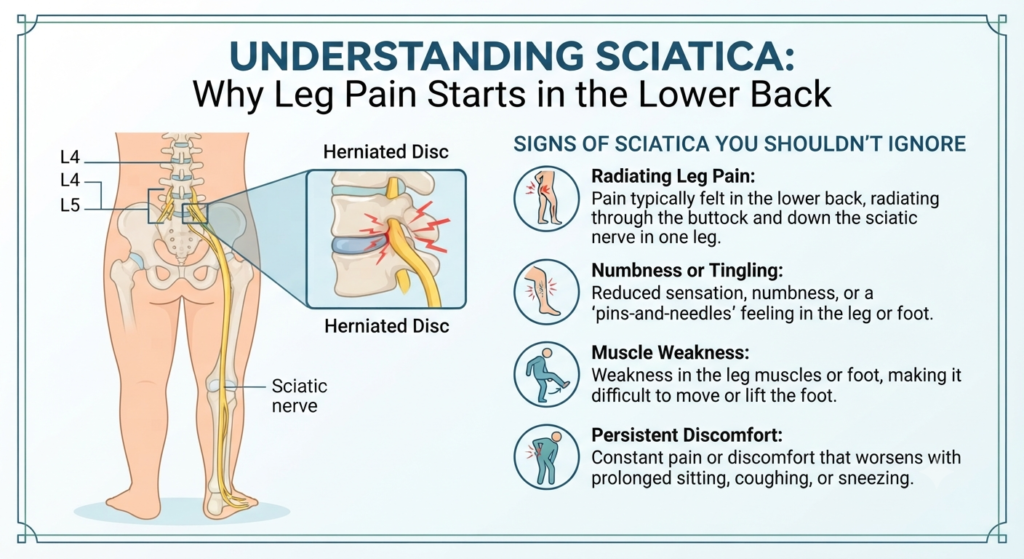
What Is the Sciatic Nerve?
The sciatic nerve is the largest nerve in the human body. It begins in the lower back, passes through the hips and buttocks, and travels down each leg. When pressure is placed on this nerve, pain can radiate along its entire pathway.
Many people are surprised that the source of their leg pain is actually located in their lower back. A disc bulge, spinal narrowing, muscle tightness, or nerve compression in the lumbar spine can all trigger symptoms in the leg rather than the back itself.
Signs That Your Leg Pain Could Be Sciatica
1. Pain Travels Down One Leg
A common feature of sciatica is pain that starts in the lower back or buttock and moves down one leg. Some people feel it in the thigh, while others experience it all the way to the calf, ankle, or foot.
Unlike muscle soreness, the pain follows a specific path because it is related to nerve irritation.
2. Burning, Electric Shock, or Shooting Pain
People often describe sciatica as:
- Sharp shooting pain
- Burning sensation
- Electric shock-like pain
- Sudden stabbing discomfort
These symptoms are typical of nerve-related pain rather than joint or muscle pain.
3. Tingling or Numbness
Some patients notice pins and needles in the leg, foot, or toes. Others experience numb patches where sensation feels reduced.
Even when the pain is manageable, numbness should not be ignored because it may indicate ongoing nerve involvement.
4. Pain Gets Worse While Sitting
Many people with sciatica feel relatively comfortable when standing but develop worsening pain after sitting for long periods.
Desk workers, drivers, and individuals who spend several hours seated often notice this pattern first.
5. Weakness in the Leg
Difficulty climbing stairs, lifting the foot, or maintaining balance may suggest that the nerve is affecting muscle function. Weakness should always be evaluated by a healthcare professional.
Common Causes of Sciatica
Sciatica can develop for several reasons, including:
Herniated or Bulging Disc
A spinal disc may protrude and place pressure on a nearby nerve root. This is one of the most common causes of sciatica.
Spinal Stenosis
As people age, the spaces within the spine can become narrower. This narrowing may compress nerve roots and produce leg pain.
Piriformis Muscle Irritation
The sciatic nerve passes close to muscles in the buttock region. Tightness or spasm in these muscles can irritate the nerve and cause symptoms similar to sciatica.
Degenerative Changes in the Spine
Natural wear and tear in the lower back can sometimes lead to nerve compression and recurring symptoms.
When Should You See a Doctor?
Many people wait for months hoping the pain will disappear on its own. Unfortunately, untreated nerve compression may become more difficult to manage later.
Seek medical attention if:
- Pain lasts more than a few weeks
- Walking becomes difficult
- Numbness increases
- Weakness develops in the leg
- Daily activities are affected
- Pain keeps returning despite rest
Early evaluation helps identify the underlying cause and determine the most appropriate treatment plan.
How Sciatica Is Evaluated
A pain specialist will usually review:
- Location of the pain
- Movement patterns that worsen symptoms
- Muscle strength
- Reflexes
- Nerve-related symptoms
Imaging studies such as MRI or other investigations may be recommended when necessary to identify the source of nerve compression.
Treatment Options for Sciatica
Treatment depends on the cause and severity of symptoms.
Many patients improve with:
- Activity modification
- Physiotherapy
- Posture correction
- Medication for pain control
- Targeted exercises
When symptoms persist, interventional pain management techniques may be considered. These include nerve root blocks, epidural injections, and other image-guided procedures designed to reduce inflammation around the affected nerve.
Expert Sciatica Care at Good Life Clinic
At Good Life Clinic, patients receive personalized care for chronic pain conditions, including sciatica, back pain, joint pain, and cancer-related pain. The clinic believes that every patient is different and therefore requires an individualized treatment plan focused on both relief and long-term well-being. Conveniently located in the Vasna-Bhayli area of Vadodara, the clinic offers specialized pain management services under the guidance of experienced professionals.
Dr. Akanksha Bansal, a Pain and Palliative Care Physician, has extensive training in pain management and interventional pain procedures. The clinic focuses on understanding the root cause of pain and creating customized treatment strategies suited to each patient’s condition.
Don’t Ignore the Warning Signs
Leg pain that begins in the lower back is not always a simple muscle strain. If the discomfort travels down the leg, causes numbness, tingling, or weakness, the sciatic nerve may be involved.
Getting the right diagnosis early can help prevent prolonged discomfort and support a faster return to normal activities. If your symptoms have been limiting your movement, work, or quality of life, a professional evaluation can help identify the cause and guide the next steps toward relief.